Quick sort by character of the smell
Note what the smell is like and when it appears. That alone often points to the source.
- IfSweet, woody smoke at lunch and dinner hours, strongest with windows openThenLikely a wood or charcoal smoker or grill at a nearby restaurant. Outdoor odor from a business is a city and building management matter, not something cleaning your unit will solve.
- IfGreasy, fried or cooking smell that follows business hoursThenCommercial kitchen exhaust. Ask management where the exhaust discharges and whether it runs past windows or intakes for the residential floors.
- IfStale cigarette smell on warm evenings, coming through windows or balcony doorsThenPatio or sidewalk smoking below. Check the building's no-smoking boundaries and where people gather.
- IfSkunky smell indoors, at irregular times, with windows closedThenProbably cannabis from another unit traveling through the building. Look at corridor air, shared walls and penetrations.
- IfStale smell that never fully goes away, worse when heat runsThenResidue inside your own unit from a previous occupant. That is a cleaning and treatment problem.
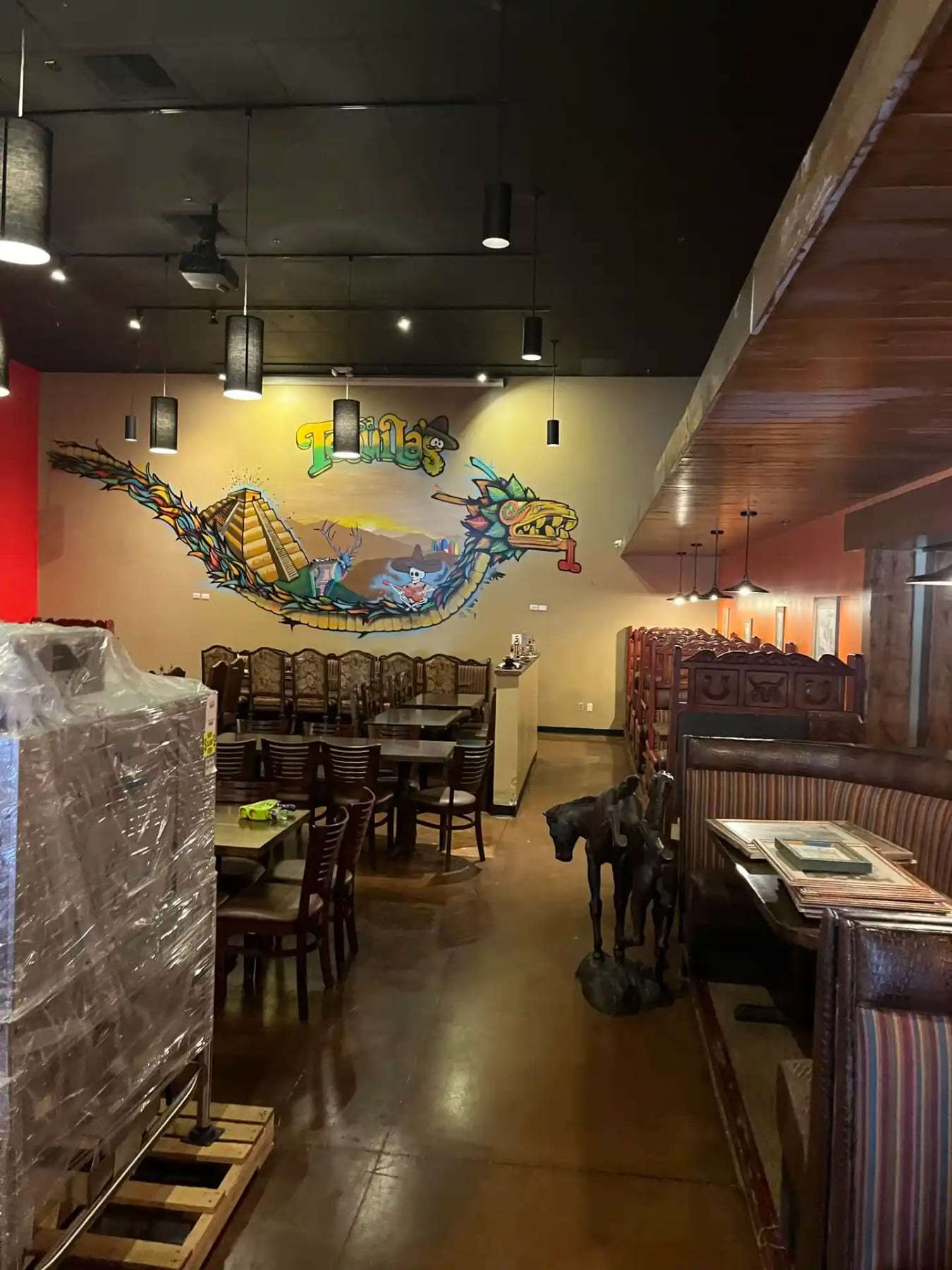
Restaurant dining area with a wall mural and contents wrapped on pallets. One example of what this stage can look like; it is not a job connected to this site.
Why mixed-use buildings complicate things
A typical new building on Larimer or Walnut Street might have a brewery or restaurant on the ground floor and apartments or condos above. Restaurant kitchens must exhaust cooking fumes, usually through a roof fan, and the location of that fan relative to residential windows, balconies and ventilation intakes makes a big difference. A wood-fired smoker can produce a lot of fragrant smoke that settles into nearby units on still evenings.
Bars and venues add people smoking outside, which Colorado's indoor smoking rules push onto sidewalks and patios. Smoke rises from there toward open windows above. Meanwhile, residential cannabis use stays inside units, where it can travel through the building's interior. Residents often lump all of these together, which leads to wasted effort: deep cleaning a unit will not stop a smoker downstairs, and complaining to a restaurant will not fix residue from the unit's previous tenant.
Keep a simple log for a week with the time, the character of the smell, where in the unit it is strongest, and whether windows were open. Patterns that line up with restaurant hours point outside; patterns that do not point inside.
Who to contact for each source
| Source | First contact | What to bring |
|---|---|---|
| Restaurant smoker or kitchen exhaust | Your building manager or HOA, then the business | Your log of times and dates, and photos of where exhaust leaves the building |
| Persistent outdoor commercial odor | Denver's public health and environment department, typically reached through 311 | Dates, times, wind direction if known, and how long the smell lasted |
| Patio or sidewalk smoking | Building manager, and the business if it is their patio | Notes on when it happens and which windows are affected |
| Cannabis or tobacco from another unit | Property manager or HOA under the lease or smoking policy | A log showing indoor timing with windows closed |
| Residue in your own unit | Landlord if you rent; an odor provider you have checked if you own | Photos, a timeline of when you noticed it, and what you have tried |
General information for RiNo, not a quote or professional advice. In an emergency, call 911.